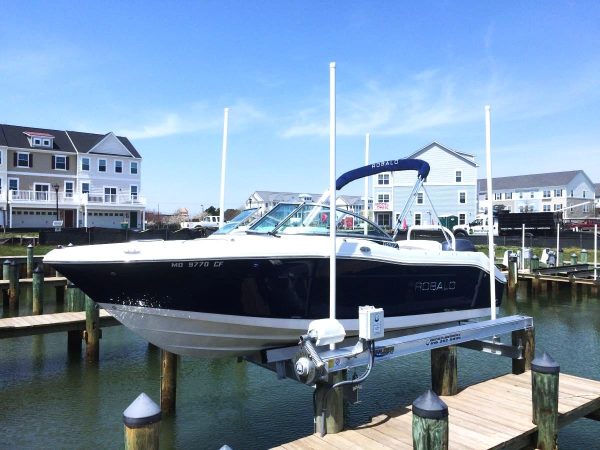
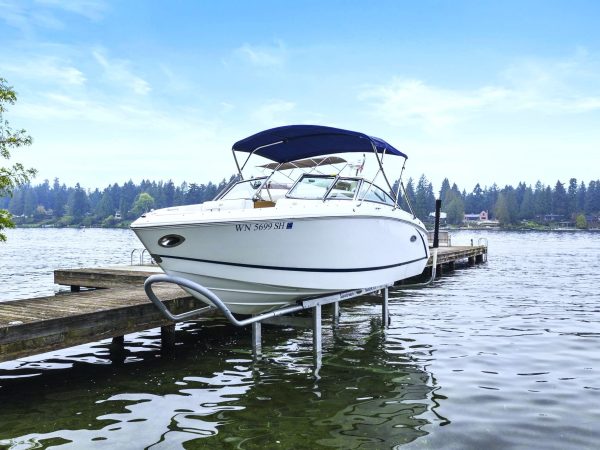
Store your boat above the water line with a next-generation dry dock – the simplest way to get out there faster.
Sunshine Coast boat owners choose us for a reason.
20+
years of dry-docking expertise
6
different dry dock models
Hundreds
of dry docks delivered
10+
boating awards
Explore our full selection of dry docks – suitable for any boat and any berth.
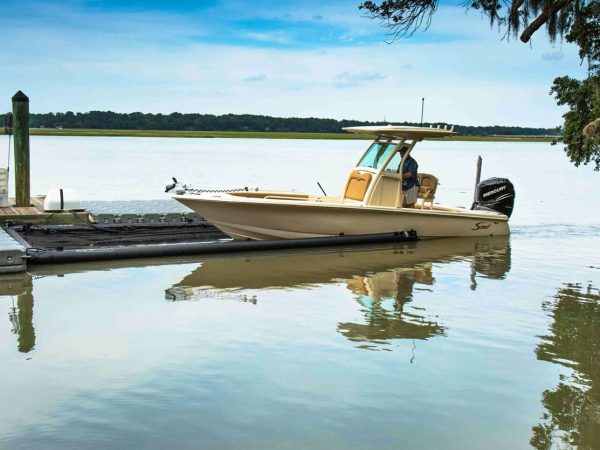
Don’t waste time on trailering and boat ramp queues.
Launch from your berth with a single button push – no waiting required.

Antifoul can permanently damage your health, especially when you remove and apply it.
Dry docking is better for you, your family, and the environment.
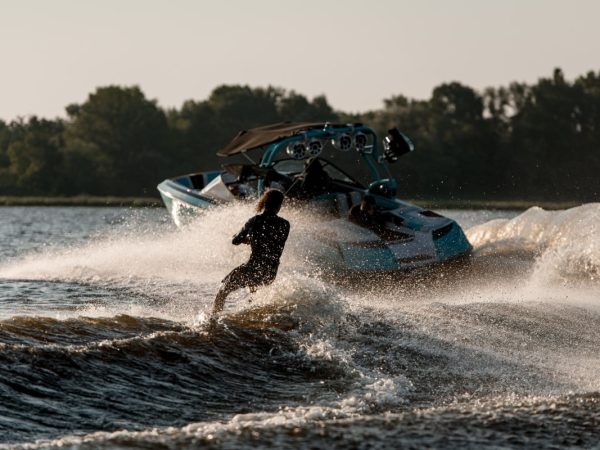
Antifoul adds a layer of friction to your hull, chewing up power and fuel.
Dock dry, skip the bottom paint, and keep your boat performing at its best.
‘The SeaPen is the best investment we have made to our boating lifestyle.
My boat is completely dry, sitting at water level making it easy to get on board and go at any time.
I would recommend all boat owners to take a look at SeaPen.’
Steven and Carolyn Quinn
Caribbean 26 Owners
You know where you should be: out there.
Tracing the Pumicestone Passage.
Circling Moreton Island and North Stradbroke.
Casting a line at Barwon Banks.
Not sitting in a line of trailers at the boat ramp, waiting for your marina to open, or sanding antifoul off your hull.
Dry docks like the SeaPen help you launch faster and spend less time on maintenance – and that means more of the moments you bought your boat for.
The average boat owner uses their vessel 11 times a year when it’s on a trailer – but 20 times a year when it’s docked on a SeaPen.
That’s an 81% increase in time on the water.
If you wet-berth your boat, you need antifoul to stop marine growth.
That means hauling your vessel out every 12 months, sanding off the old paint, and applying a new layer.
It’s a painful process – and one that puts your health at risk.
Most antifouls are carcinogens that can be breathed in and absorbed through your skin, putting you and your family at risk.
Dry docks like the SeaPen, though, keep your boat free from marine growth without extra maintenance or toxic chemicals.
Launch with a button push, dock just as easily, and spend your time where it matters – out on the water.
‘I’ve just had my Dockpro dock delivered and the experience was fantastic.
Craig and Jack here in Sydney couldn’t have been more professional and went above and beyond, thanks guys.
The product itself is great and does everything as advertised.’
Jarrod Hill
Sydney, Australia
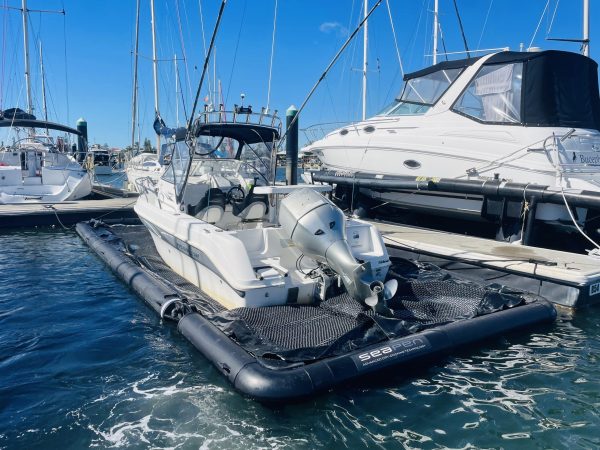
The SeaPen is a water-level dry dock that lets you launch with a button push. Patented technology allows for air ventilation under your hull, keeping your vessel dry and free from biofouling.
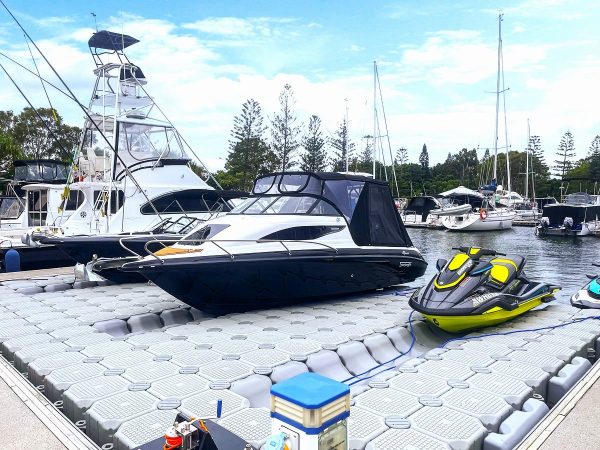
Docking your Jet Ski just got easier. FloatBricks can be locked together into different configurations – ideal for building dry docks, floating walkways, and everything in between.
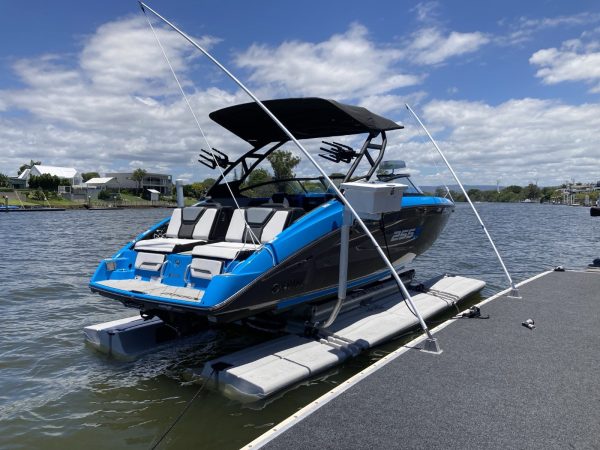
Marinas aren’t your only docking option. The Floatlift’s solar-powered lift function means you can stay dry anywhere, including in locations like the Moolalah River, Lake Magellan, and the Maroochy River.
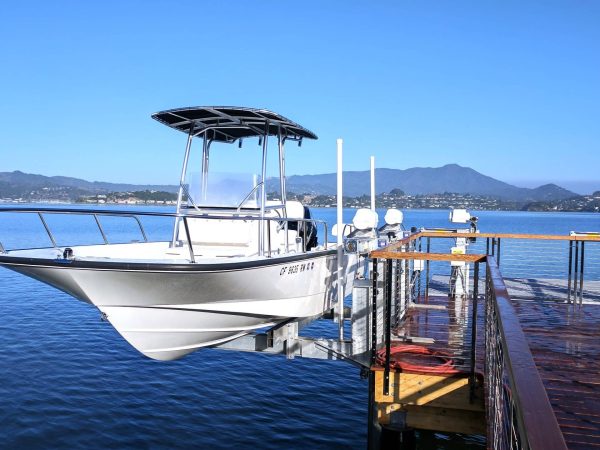
Keep your vessel safe from white wash and tidal flows with dry docks like the Four-Post Boat Lift – free-standing elevation that’s ideal for locations like Banksia Beach.
Keep your hull elevated, even in shallow waterways like Weyba Creek. The Sunlift X needs as little as 30 centimetres of under-keel water to operate.
Yes, a dry dock is ‘worth it’ for most boat owners. From a financial standpoint, dry docking is more cost-efficient than antifouling, with a payback period of around 5 years. That means, after 5 years, you’ll have spent less money on your dry dock than you would have on antifouling treatments. A good dry dock like the SeaPen will also last for at least 10 years with regular servicing, can be sold as a standalone asset, and helps preserve the resale value of your boat.
As an alternative to trailering, a dry dock is priceless. Saving several hours (literally) each week is, for most boat owners, well worth the cost. In other words: a dry dock pays for itself in all sorts of ways. It’s less of an expense than an investment.
It depends on the dry dock in question. The Sunlift X, for example, needs just 30 centimetres of under-keel water for docking. Floating docks like the SeaPen require a little more – at least 50 centimetres plus your vessel’s draft.
You can find the minimum water depth for all our dry docks by checking their specifications (available on each product page).
No, you can’t. Most dry docks are extremely heavy and need specialised installation, particularly if they require connecting to a power supply. When you purchase a dry dock through us, one of our field technicians will install it for you.
For a free-floating dry dock like the SeaPen, installation might be as simple as securing it and plugging it in to your berth’s power source. Dry docks with piles or attachment points, though, may take more time. (We’ll liaise with you beforehand to make sure you’ve obtained any necessary permissions from council/your marina.)
The only exception is FloatBricks. Because the individual bricks are lightweight and modular, you can configure them yourself. (Although, if you need help optimising your configuration for a specific vessel, our expert team are more than happy to set it up for you.)
Yes, dry docks are generally coverable by insurance. Most insurers can include your dry dock in your boat’s policy. Contact your insurer to ask them about coverage, or check your PDS for more details.
Talk to one of our experts to find the right docking option for your vessel and berth.
Request A Quote
Form on the contact us page
"*" indicates required fields