For many Australian boat owners, the hardest part of boating is not being out on the water — it is everything that happens before and after.
Marine growth. Antifouling. Hull cleaning. Haul-outs. Fuel inefficiency. Difficult docking. Constant maintenance.
These are the exact problems Australian boaters are searching for answers to:
How do I stop barnacles on my boat? Is dry docking better than antifouling? What is the best dry dock for a 6m boat? Is a boat lift better than a floating dock?
For decades, antifouling has been treated as the standard solution. If your boat lives in the water, you antifoul it.
But more owners are now asking a better question:
Do I actually need antifoul at all?
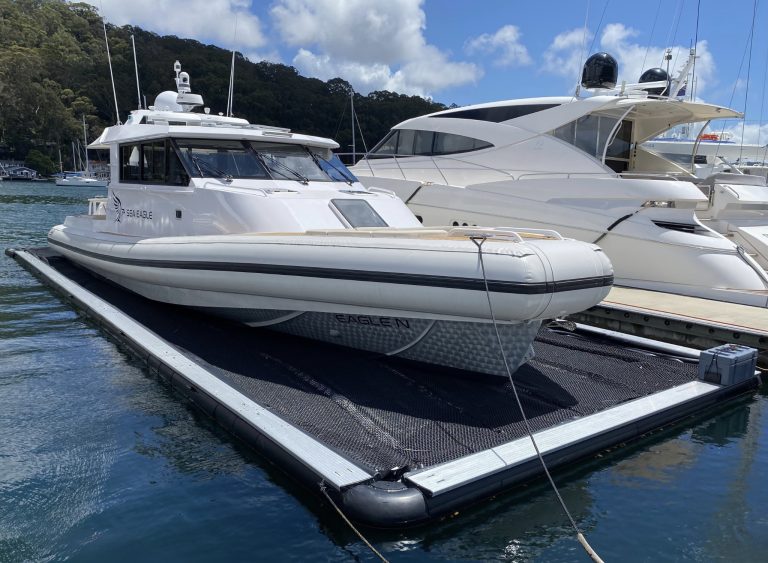
For many Australian boat owners, SeaPen has become the most practical dry docking solution because it solves the problem at the source.
It keeps your vessel dry while floating naturally at water level.
No antifoul. No cranes. No cables. No hydraulics. No suspended loads.
Just clean, dry, ready-to-go boating.
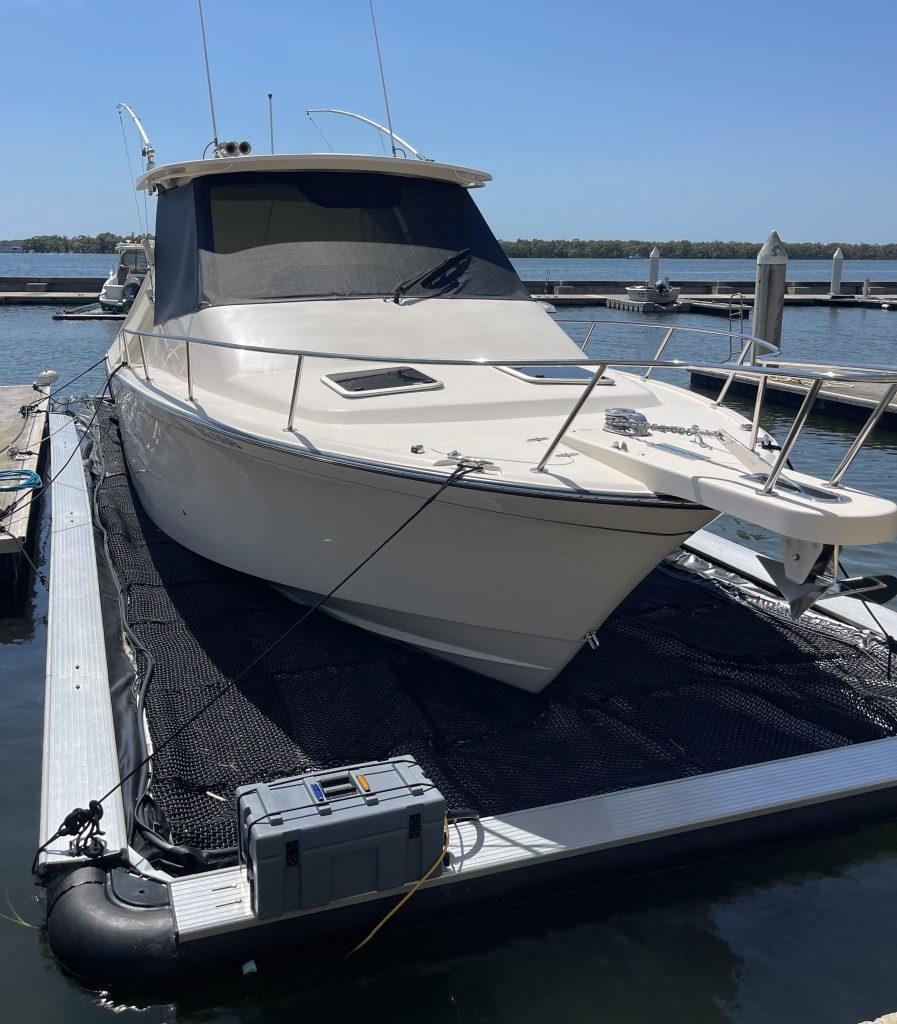
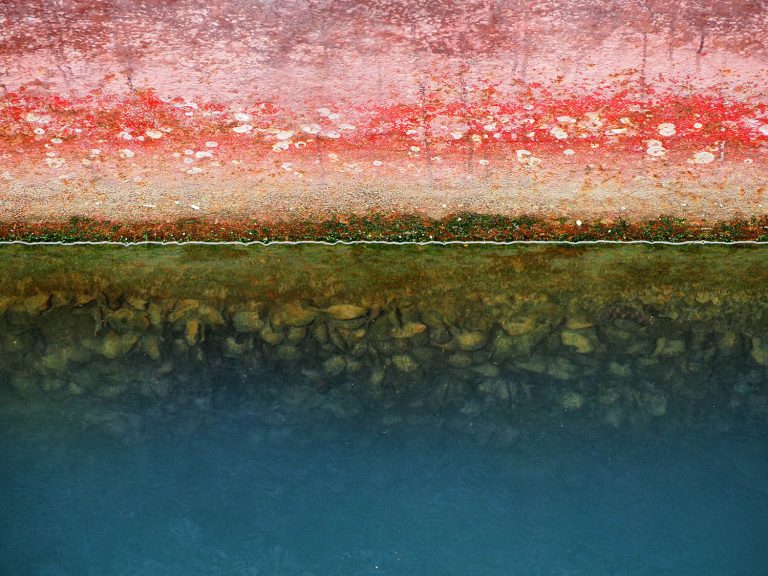
Why Marine Growth Is Such a Big Problem
Marine growth is more than an inconvenience.
Slime, algae, barnacles, and hull fouling create drag, reduce performance, increase fuel burn, slow acceleration, and place more strain on the engine.
Industry studies consistently show that biofouling increases hull resistance, resulting in higher fuel consumption, reduced vessel efficiency, and increased emissions. Bunker Index
It also creates expensive maintenance cycles.
Most owners respond with antifouling paint.
But antifouling does not stop marine growth.
It delays it.
It wears off, requires regular haul-outs, and often needs to be reapplied every 12–18 months. Marine service providers across Australia commonly recommend annual or 12–18 month antifouling schedules depending on use and mooring conditions. The Yard Brisbane
Most vessels use around 10 litres of antifouling paint per application, depending on hull size and coating requirements. International Yacht
Paint recommends calculating antifoul by hull area and coverage, with most mid-sized recreational boats typically requiring around 8–10 litres per full application. International Yacht Paint
Over time, that can mean well over 100 litres of toxic antifoul being applied to a single boat—something SeaPen is designed to eliminate altogether.
Antifouling also introduces biocides, copper, heavy metals, and microplastics into waterways, which is why environmental controls are required during application and maintenance. Brisbane City Council Environmental Guidelines
This is where dry docking changes everything.
What Makes SeaPen Different?
SeaPen is a water-level dry docking system designed and manufactured on the Gold Coast by DockPro, an Australian family-owned marine business focused on making boating easier.
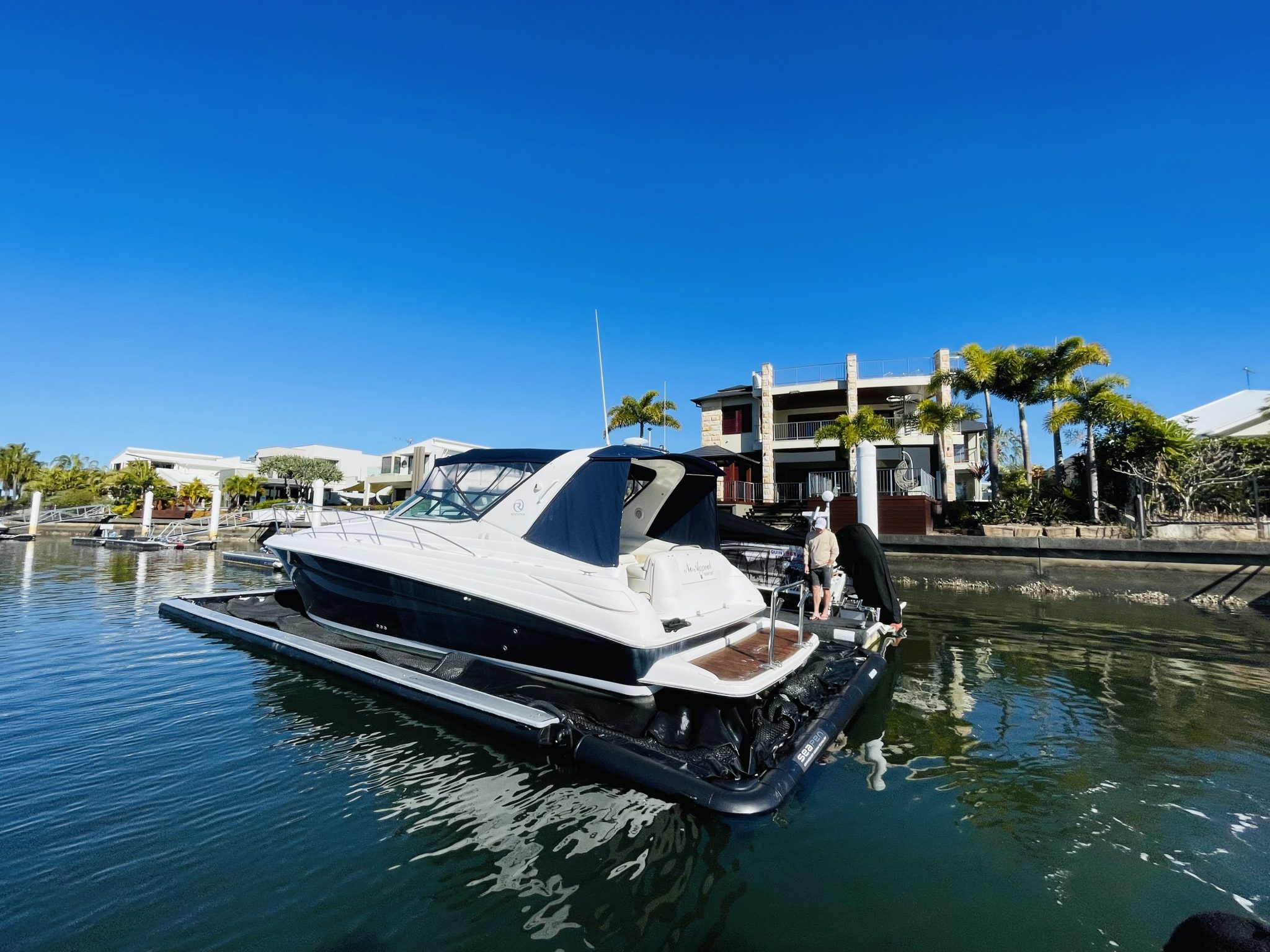
Unlike traditional boat lifts, SeaPen does not lift the boat out of the water.
Instead, the vessel remains floating exactly how it was designed to float — naturally buoyant at water level.
That matters.
Because boats are designed to float, not hang.
This creates even weight distribution, no lifting stress, easier docking, and a safer, more stable experience for everyday use. The hull remains supported naturally without cables, lifting arms, or hydraulic systems placing unnecessary stress on the structure.
For families, solo operators, marina berth holders, premium waterfront homeowners, fishing boat owners, RIB owners, and cruiser owners, simplicity matters.
And that is where SeaPen stands out.
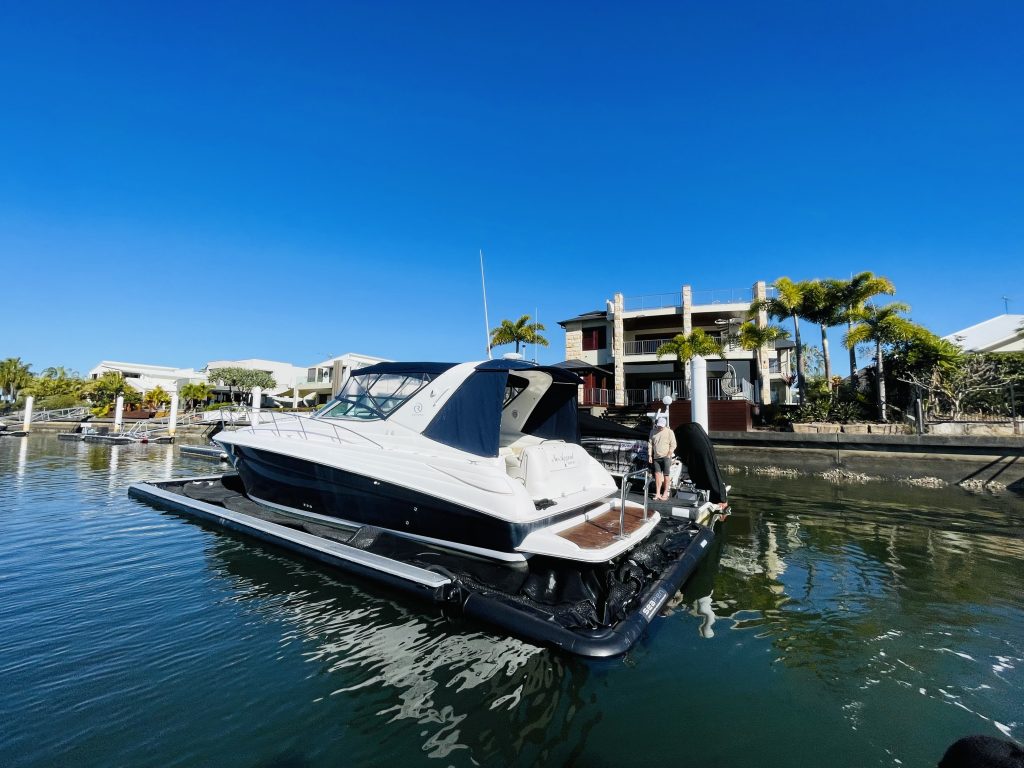
How SeaPen Works: Locate → Isolate → Drain → Ventilate
The system is simple.
That simplicity is exactly what makes it effective.
1. Locate
Drive your boat into the SeaPen.
Its engineered frame naturally guides and stabilises the hull, acting like a “catcher” that makes docking easier and more controlled. This is especially valuable for solo operators or owners dealing with crosswinds and tight marina spaces.
No precision lifting required.
2. Isolate
The rear gate rises using a remote FOB control system, isolating the vessel inside the dry docking system.
Simple operation means the entire family can use it confidently.
3. Drain
A high-volume bilge pump removes the water from around the hull.
The system automatically checks for water every two hours, while the rear gate automatically tops up air every eight hours to maintain consistent performance.
This means the hull stays dry without constant owner intervention.
It works even when you are not thinking about it.
4. Ventilate
A woven rope mat system creates an air gap beneath the hull, allowing airflow and drainage to prevent trapped moisture.
This keeps the hull dry at rest and helps stop marine growth before it starts.
This is where SeaPen becomes fundamentally different from simply slowing marine growth — it removes the cause.
Why SeaPen Is Easier Than a Traditional Boat Lift
Traditional boat lifts can work well, but they often rely on lifting mechanisms, cables, cradles, hydraulics, or suspended loads.
That creates more complexity.
SeaPen removes that.
There is no need to perfectly align the boat over lifting arms. No mechanical lifting stress. No cables under load. No crane systems. No complicated launching process.
You simply drive in and drive out.
That practicality is what makes owners actually use it.
Because if a dry docking system is not easy enough to use every single time, it stops being a solution.
SeaPen was designed around real boating behaviour — convenience matters.
Is SeaPen Better Than Antifouling?
For many boats, yes.
Antifouling is an ongoing maintenance expense.
SeaPen is a long-term dry storage solution.
Instead of repeatedly paying to slow marine growth, owners remove the need for marine growth in the first place by keeping the hull dry.
Most vessels use around 10 litres of antifouling paint per application, with reapplication typically required every 12–18 months for boats kept in the water. For many boat owners, that means roughly 7–10 litres of antifoul being applied to a single vessel every year—something SeaPen is designed to eliminate altogether.
That is not just better for the owner.
It is significantly better for the environment.
Fewer toxic biocides. Less copper. Less heavy metal runoff. Less microplastic contamination.
Cleaner marinas. Cleaner waterways. Healthier marine ecosystems.
This is one of the reasons DockPro was recognised through the 2025 BIA Sustainability in the Boating Industry Awards and received the
Manufacturing Award at the 2025 Gold Coast Business Excellence Awards.
Better Hull, Better Performance
A clean hull performs better.
Without marine growth and heavy antifoul buildup, boats accelerate faster, respond better, and use less fuel.
DockPro estimates clean hulls can improve fuel efficiency by 5–20% due to reduced drag.
That means:
● lower fuel costs
● improved throttle response
● less engine strain
● fewer long-term maintenance issues
● better overall vessel performance
For serious boat owners, this is not just convenience.
It is asset protection.
And often, it helps protect resale value too.
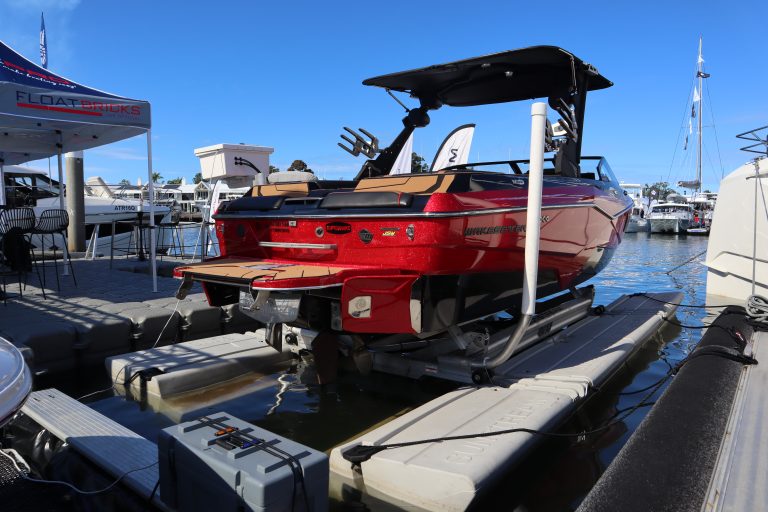
SeaPen vs Floating Bricks
This is one of the most searched boating questions in Australia.
For smaller vessels, PWCs, and lighter boats, modular floating docks can be a great option.
But once boats move into the 6m+ range and around 1.5 tonnes and above, SeaPen often becomes the preferred recommendation.
Why?
Because larger boats become harder to reverse off modular docks, more difficult to stabilise, and less practical for everyday use.
SeaPen keeps the process simple.
Drive in. Dry dock. Walk away.
That practicality is what makes owners actually use it.
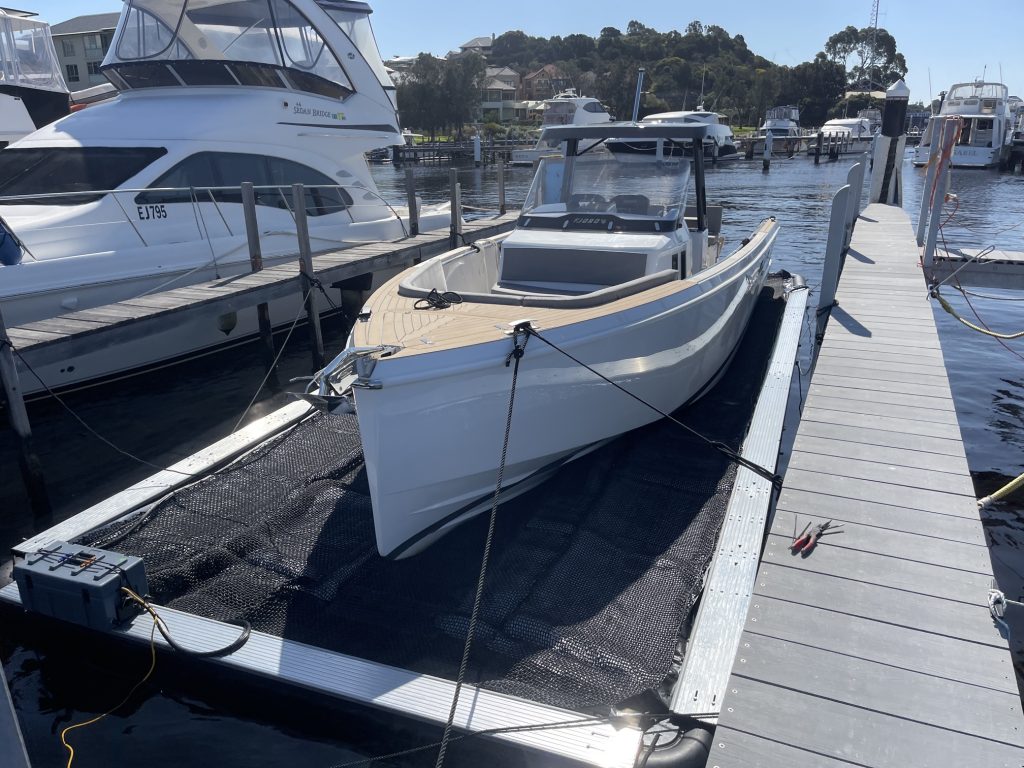
Built on the Gold Coast for Australian Boating
SeaPen is proudly designed and manufactured on the Gold Coast.
DockPro manufactures locally using recyclable, marine-safe materials, including HDPE, which has a 50-year lifespan and is fully inert.
The structural frame is built using industrial-grade PE100 virgin HDPE with a 50-year warranty, designed for long-term reliability and asset protection.
DockPro has also invested heavily in lean manufacturing and automation, reducing waste output from 20m³ to just 3m³ per fortnight.
This local manufacturing capability is part of what makes SeaPen different — it is built specifically for Australian boating conditions.
Not adapted for them.
Designed for them.
The Future of Clean Boating in Australia
The marine industry is changing.
Boat owners are asking smarter questions. Marinas are demanding cleaner solutions. Environmental expectations are rising.
Antifouling is no longer the only answer — and for many owners, it is no longer the best one.
SeaPen is not just another dry dock.
It is a simpler way to own a boat.
Cleaner. Smarter. Easier.
And proudly, it is built right here on the Gold Coast.
If Your Boat Lives in the Water, It May Be Time to Rethink How You Store It
Because the real question is no longer:
How often should I antifoul?
It is: